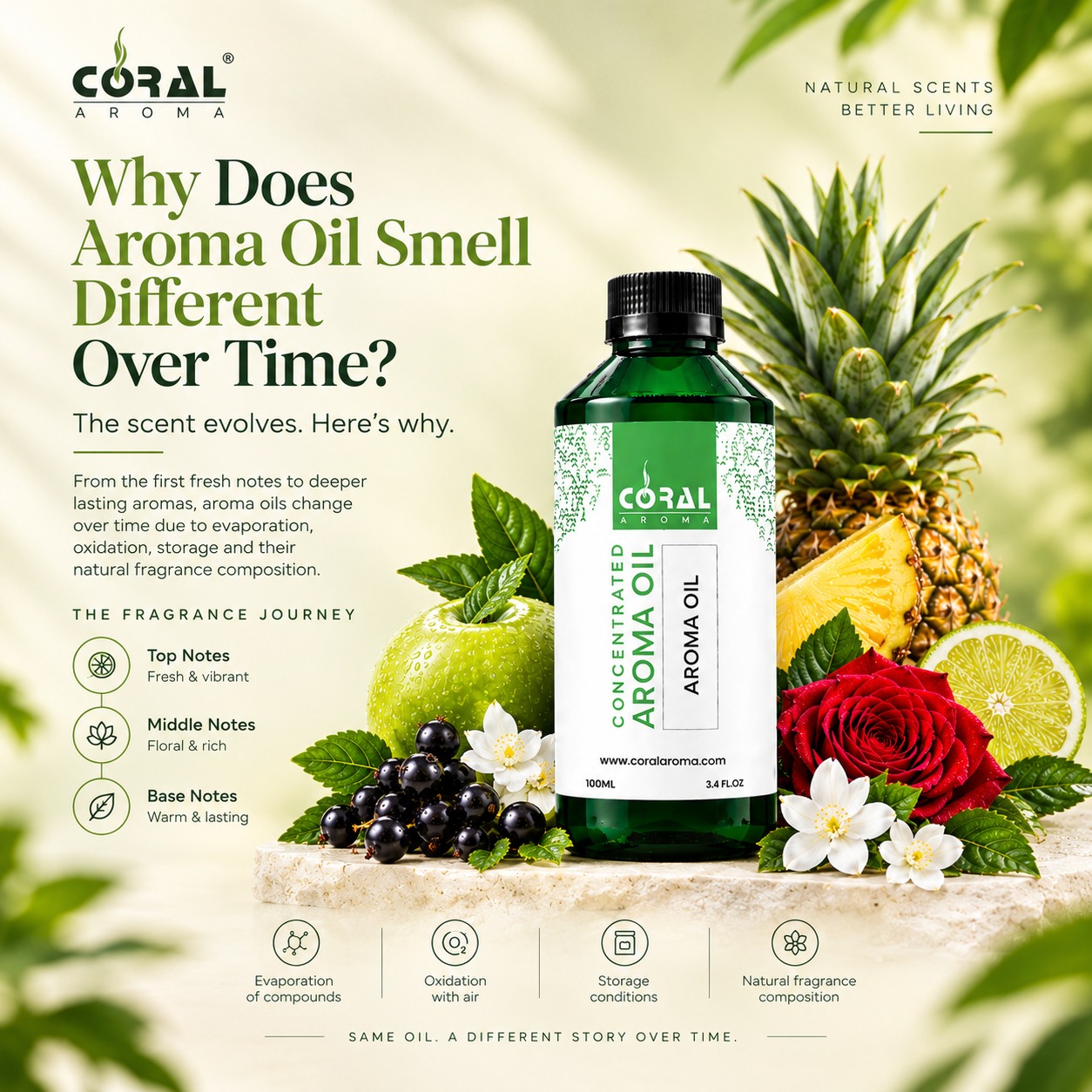
Have you ever noticed that a fragrance smells fresh and vibrant at first but develops a deeper or softer character over time? This is a common experience with fragrance products, and it can be explained by fragrance evolution—the way a scent’s perceived character changes because of evaporation, chemical composition, environmental conditions and storage.
Understanding why an aroma oil smells different over time helps consumers choose suitable fragrances, store them correctly and maintain a consistent scent experience at home, in offices or in commercial spaces. Whether you enjoy fresh, floral or marine-inspired fragrances, knowing how scents develop can help you make better purchasing decisions.
What Is Fragrance Evolution?
Fragrance evolution refers to changes in how a scent is perceived over time. Different aromatic compounds have different levels of volatility, meaning they evaporate at different rates. As some compounds become less prominent in the surrounding air, other components may become more noticeable.
Perfumers often describe this process through three fragrance stages:
- Top notes: The initial impressions, often fresh, light or citrus-like, that are noticeable shortly after exposure.
- Middle notes: The central character of the fragrance, which may include floral, herbal or fruity elements.
- Base notes: Deeper, longer-lasting impressions, often associated with woody, musky or resinous characteristics.
These stages are a useful guide rather than a universal rule. Not every fragrance develops in exactly the same way, and the rate of change depends on its ingredients, concentration and method of use.
Why Does an Aroma Oil Smell Different Over Time?
Several scientific and sensory factors explain why a fragrance may smell different after opening a bottle, applying a scented product or using a diffuser.
1. Evaporation Changes the Scent Profile
Evaporation is one of the main reasons fragrances change over time. More volatile aromatic compounds generally enter the air faster, creating the initial impression of a scent. Less volatile compounds may remain noticeable for longer.
For example, a fragrance inspired by lavender breeze may initially seem fresh and airy before its softer herbal or floral characteristics become more prominent. The actual progression depends on the formulation rather than the fragrance name alone.
In a diffuser, airflow, temperature and diffusion technology also influence how aromatic compounds enter the surrounding space. Consequently, a fragrance can smell different in a closed room compared with a well-ventilated office.
2. Oxidation Can Alter Fragrance Quality
Oxidation occurs when certain fragrance ingredients react with oxygen. This process can change their chemical composition and may affect the original scent.
Repeatedly opening a bottle exposes its contents to air. Over time, oxidation may contribute to a fragrance becoming duller, sharper or less recognisable. Some ingredients are more susceptible to oxidation than others.
Changes in smell do not always indicate oxidation, however. Normal evaporation and differences in how a fragrance is experienced can also explain the change.
3. Storage Conditions Matter
Heat, light and air exposure can affect fragrance stability. Poor storage conditions may accelerate deterioration, particularly in products containing sensitive aromatic ingredients.
To help preserve fragrance quality:
- Store bottles in a cool, dry place away from direct sunlight.
- Keep the cap tightly closed after use.
- Avoid leaving bottles near heaters, windows or other sources of heat.
- Follow the manufacturer’s storage and shelf-life recommendations.
These steps can help maintain the intended fragrance profile for longer, although they cannot prevent every form of chemical change.
4. Chemical Composition Influences Longevity
Every fragrance contains a different combination of aromatic compounds. Some evaporate quickly, while others remain noticeable for longer. The balance between these ingredients influences both the initial scent and its later development.
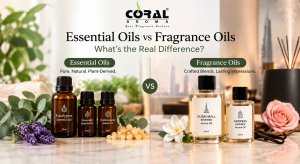
The distinction between natural essential oils and formulated fragrance oils is also important. Essential oils are extracted from natural materials, while fragrance oils may contain combinations of natural and synthetic aromatic ingredients. Their stability and scent development vary according to their individual formulations.
When choosing aromatherapy oils, consumers should check the product’s intended use and ingredients rather than assuming that all oils behave alike.
Why Can the Same Fragrance Smell Different in Different Spaces?
A fragrance is experienced through both its chemical composition and the environment in which it is released.
Room size, ventilation, temperature, humidity and the type of diffuser can influence how strongly a scent is perceived. A light fragrance may seem subtle in a large, ventilated room but more noticeable in a smaller space.
Marine-inspired scents provide a useful example. A fragrance described as ocean breeze might create a fresh, airy impression, while a sea mineral accord may suggest a cooler, mineral-like character. These descriptions communicate the intended sensory experience; they do not necessarily indicate that the formula contains actual seawater or marine minerals.
For homes, offices and commercial environments, selecting an appropriate fragrance intensity and diffusion method is just as important as choosing the scent itself.
What Should You Consider Before Buying Aroma Oil Online?
People searching for an aroma oil often want to understand why a fragrance changes, how long it will remain noticeable and whether its quality can be maintained. Those preparing to buy aroma oil online may also need help comparing fragrance descriptions and checking product suitability.
Before purchasing, consider the following:
- Read the fragrance description: Look for information about the scent family and its principal notes.
- Check the intended application: Confirm whether the product is designed for a diffuser, personal fragrance or another specific use.
- Review ingredient and safety information: Follow the manufacturer’s instructions and compatibility guidance.
- Consider storage and shelf life: Check the recommended storage conditions and any guidance about use after opening.
- Choose a suitable fragrance profile: Fresh, floral, woody and marine-inspired scents can create different sensory impressions, depending on their formulation and environment.
If you are exploring aromatherapy oils, remember that fragrance alone does not establish therapeutic effectiveness. Claims about health benefits should be evaluated separately from the product’s scent characteristics.
Frequently Asked Questions (FAQs)
1. Why does my aroma oil smell different after a few weeks?
The change may result from oxidation, exposure to heat or light, evaporation of volatile components, or differences in how the scent is perceived. If the smell changes significantly or becomes unpleasant, check the product’s condition and manufacturer’s guidance before continuing to use it.
2. How long does an aroma oil retain its original fragrance?
There is no single timeframe for every product. Longevity depends on the ingredients, formulation, packaging, storage conditions and whether the bottle has been opened. Follow the stated shelf life rather than relying on a general estimate.
3. Does an aroma oil lose its fragrance when used in a diffuser?
A diffuser releases aromatic compounds into the air, gradually consuming the oil. The fragrance may also seem weaker as more volatile components are released or as the user’s sense of smell adapts. Different diffusion systems produce different results.
4. How can I keep my aroma oil smelling fresh?
Keep the container tightly sealed, store it away from heat and sunlight, and follow the manufacturer’s instructions. Avoid transferring the oil into unsuitable containers, which may affect its stability.
5. Do all fragrance oils develop top, middle and base notes?
No. These stages are commonly used to describe perfume development, but they are not universal. Some fragrance oils have a relatively consistent scent, while others change noticeably as their components evaporate at different rates.
Conclusion
The evolution of fragrance is essential as it gives consumers the understanding of the process whereby a fragrance has a strong scent in the beginning, it becomes milder after a certain period of time, and changes due to the effects of the surroundings. The process of fragrance evolution is affected by a number of factors such as the aroma components’ evaporation and oxidation, as well as storage conditions, diffusion, etc.
The knowledge of these factors will help clients to make better decisions regarding perfumes’ purchase and storage, and also to realize the duration of perfumes’ effect.