What if the most powerful branding tool your business has never been seen — only smelled? Aroma marketing service is quietly reshaping how businesses connect with customers, turning an invisible sense into a measurable competitive edge. The global scent marketing industry was valued at approximately 3.6 billion USD in 2024 and is projected to reach 6.4 billion USD by 2033. That is not a niche trend. It is a mainstream shift in how serious businesses think about customer experience. Studies show that 84 percent of consumers are more likely to remember a brand that uses a unique scent — a recall rate that outperforms visual and audio cues combined.
This is not a new idea. It is one whose time has fully arrived.
A Brief History: From Ancient Bazaars to the Modern Boardroom
The story of aroma marketing service does not begin in a startup pitch deck. It begins in the open-air markets of ancient Egypt, Greece, and Rome, where merchants burned frankincense, myrrh, and imported spices not merely for ritual purposes, but to draw customers in.
One often-recounted tale from ancient Rome describes a linen merchant who burned rare Lebanese cedar outside his stall each morning. His rivals sold the same cloth at the same price. Customers still chose him — drawn by something they could not quite name. That invisible pull was aroma marketing service in its earliest and most instinctive form.
By the 18th and 19th centuries, Parisian bakers and London coffee houses had turned aromatic timing into an art. Ovens were timed to morning pedestrian hours. Coffee beans were roasted near open windows. These were not accidents. They were deliberate strategies that worked then, and they still work now.
In the early 1900s, major department stores began placing fresh flowers and roasted coffee near their entrances to engineer a welcoming first impression. Then in 1921, Coco Chanel doused her Paris fitting rooms with Chanel No. 5, making her fragrance inseparable from the experience of her brand. Customers were not just buying fashion. They were buying a feeling.
By the 1970s, Cinnabon had discovered that placing ovens at the front of stores flooded mall corridors with warm cinnamon scent — an almost unfairly effective sales strategy still in use today. Pioneer Mark Pelletier founded Aromasys, creating the first commercial diffusion devices to bring outdoor scents indoors. Scent had become technology.
The 1990s brought scientific validation. In 1995, neurologist Dr. Alan Hirsch published research showing that casino gamblers spent 45 percent more in scented areas than in unscented ones. Singapore Airlines introduced its now-legendary Stefan Floridian Waters scent across cabin air systems and warm towels, creating an olfactory identity that passengers around the world associate with the brand. Specialist firms like ScentAir and Air Aroma emerged to meet the commercial demand. What started with merchants burning incense had become a 3.6 billion USD global industry — and it is still growing.
What Is Aroma Marketing Service? The Science Behind the Strategy
Aroma marketing service — also known as scent marketing — is the deliberate use of fragrance to influence customer behaviour, reinforce brand identity, and shape the emotional experience of a space.
Unlike sight or sound, smell bypasses the thalamus and connects directly to the limbic system — the brain’s emotional and memory centre. This is why the scent of sunscreen instantly conjures a childhood beach, or a particular cologne brings a person vividly to mind. Scent is the only sense with a direct line to emotional memory, which makes it uniquely powerful for brand building.
For businesses, the strategic implications are significant:
Emotional anchoring: A signature scent links your brand to a positive emotional state that customers carry long after leaving your space.
Increased dwell time: Customers spend measurably longer in pleasantly scented environments. More time spent consistently leads to more money spent.
Brand recall: 84 percent of consumers are more likely to remember a brand with a unique scent. Singapore Airlines passengers identify the airline’s scent in blind tests.
Elevated perceived quality: The right fragrance makes a space feel more premium, more trustworthy, and more worth returning to.
Mood engineering: Citrus energises, lavender calms, and warm vanilla creates comfort. Brands can actively shape the emotional state customers arrive in.
This connection between scent and perceived brand value is now so well-documented that businesses are being evaluated subconsciously on how they smell. A luxury hotel with a sterile scent loses ground to a competitor with a warm, distinctive fragrance, even when every other quality metric is equal. Scent has become a branding currency.
Who Is Using Aroma Marketing Service — and What Is It Generating?
Aroma marketing service is no longer a luxury-brand exclusive. Industries across the commercial spectrum are adopting it at scale.
Hospitality
Hotels, resorts, and spas represent the second-largest adopter globally. The Middle East — led by the UAE — is one of the strongest regional markets, driven by luxury hospitality investment in Dubai, Abu Dhabi, and Saudi Arabia. Four Seasons, Marriott, and Hilton all run proprietary signature scent programmes.
Retail
Retail stores account for over 35 percent of global scent marketing revenue, with fashion, luxury goods, and supermarkets leading adoption. Nike reported a 10 to 15 percent increase in purchase intent in scented showrooms. Abercrombie and Fitch famously built an entire brand identity on a single fragrance pumped through HVAC systems.
Aviation
Singapore Airlines, Emirates, and Oman Air have all invested in cabin and lounge scent programmes. The connection between inflight comfort and brand loyalty makes aviation a natural fit for signature scent strategies.
Healthcare and Wellness
Scented environments in clinics and hospitals have been shown to reduce patient anxiety and improve perceived quality of care — a particularly important metric in competitive private healthcare markets.
Automotive and Corporate
Car dealerships in Europe and North America use scent to create the new-car experience in used vehicle showrooms and waiting areas. Office environments diffused with energising scents show measurable productivity improvements. Government service centres across the UAE — including RTA and DEWA — have adopted ambient scenting to improve the customer service experience.
The commercial scent diffuser market alone — just the machines, not including oils and services — was valued at 825 million USD in 2025 and is growing at 8.2 percent annually. The wider fragrance market, spanning personal, home, and commercial applications, is projected to reach 52.4 billion USD globally by 2025.
Coral Aroma: Dubai’s Leading Aroma Marketing Service Provider
With over 10 years of experience in the UAE market, Coral Aroma has built its reputation as one of the region’s most trusted names in professional aroma marketing service. They serve both commercial clients and individual customers with a full-spectrum offering.
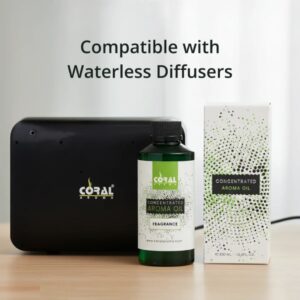
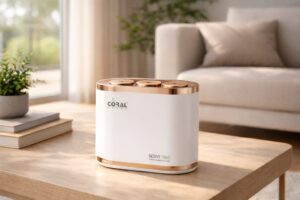
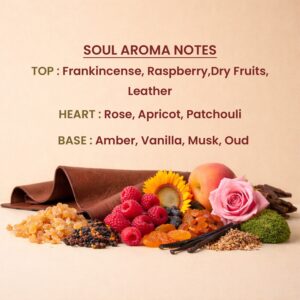
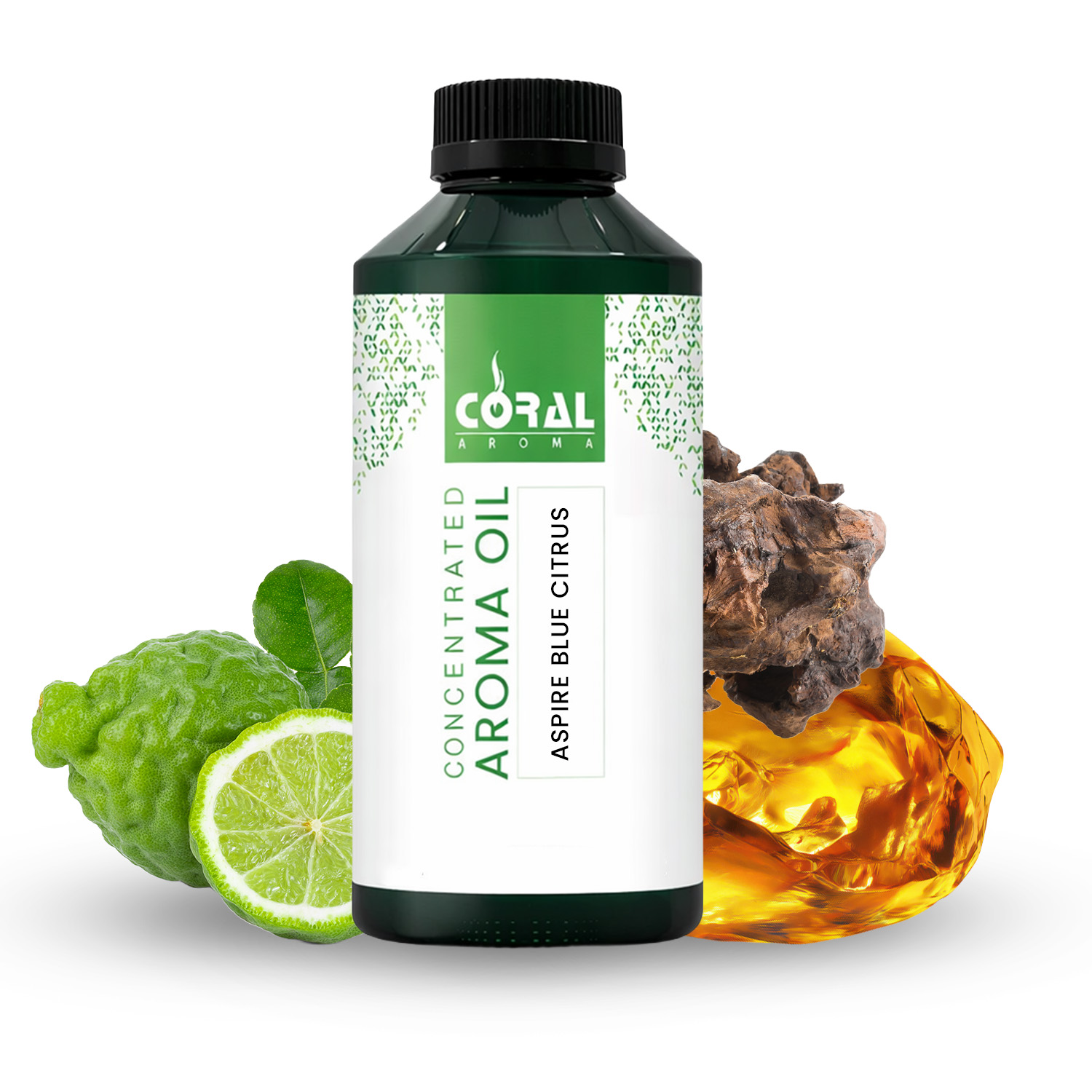
Their product range includes smart scent diffuser machines — from portable car and desktop units to large-capacity HVAC-integrated systems and tower diffusers that cover thousands of square feet. Their library of over 300 premium aroma oil blends spans Arabic ouds, hotel-inspired and perfume-inspired collections, and profiles across floral, citrus, musky, fruity, and woody notes.
Coral Aroma also provides Annual Maintenance Contracts and flexible rental options, making professional aroma marketing service accessible without heavy upfront investment. Their custom scent design service pairs a team of perfumers and branding specialists to create fragrances tailored to specific brand identities and environments. A scent sample programme allows businesses to test fragrances in their actual spaces before committing — the right scent, guaranteed.
Coral Aroma’s client list reads as a cross-section of UAE excellence: Four Seasons, Palazzo Versace, Emirates Flight Catering, Oman Air, Emaar, Dubai Holding, City Walk, RTA, DEWA, and ENOC. These are organisations that hold their suppliers to a high standard — and they keep returning. Operating from two Dubai locations in Al Quoz, Coral Aroma delivers across the UAE with free shipping above 99 AED and flexible payment via Tabby.
Why Your Business Needs an Aroma Marketing Service Strategy Today
You have invested in your interiors. Your team is trained. Your brand identity is defined visually. But the moment a customer walks through your door, before they see anything, before they speak to anyone, they smell your space. That first impression sets the tone for everything that follows.
A professional aroma marketing service gives you a scent strategy, not just a diffuser — experts who help you find the fragrance that fits your brand, your customers, and your space. It gives you flexibility at every scale, from a boutique office to a multi-floor hospitality venue. And it gives you a track record proven in your own market.
In a global market growing at nearly 7 percent annually, the brands investing in aroma marketing service today are the ones customers will still be choosing years from now — even if they cannot quite explain why.
Frequently Asked Questions About Aroma Marketing Service
What exactly is aroma marketing service?
It is the strategic use of fragrance to shape how customers feel in a space and how they perceive a brand. Think of it as the olfactory equivalent of your store’s visual design or background music — intentional, strategic, and when done well, almost invisible. Customers simply feel better without knowing why.
How does aroma marketing service help my business?
Several measurable ways. Pleasant scents increase dwell time, which increases spending. They elevate the perceived quality of your environment, improve customer mood on arrival, and create emotional memories that drive return visits. Studies show scented retail environments can increase purchase intent by 10 to 15 percent. That is a meaningful number in any commercial context.
Which industries use aroma marketing service?
Aroma marketing service is used across hospitality, aviation, retail, automotive, healthcare, real estate, education, and government service centres. Retail alone contributes over 35 percent of global scent marketing revenue. If people enter your space, scent is relevant to your business.
Is aroma marketing service safe for everyone in the space?
Professional cold-air diffusion operates at far lower concentrations than a candle or plug-in air freshener. For sensitive environments such as clinics and children’s spaces, lighter, hypoallergenic fragrance profiles and appropriate concentrations are recommended. A proper consultation process is designed to address exactly these concerns.
How long does aroma marketing service installation take?
Most commercial setups are completed within a single working day. Professional teams work around your operating hours to minimise disruption. The scent sample selection process ensures the right fragrance is chosen before any diffuser is installed.
The Invisible Advantage
From the cedar-scented stalls of ancient Rome to the HVAC-integrated fragrance systems of modern hotels, the story of aroma marketing service is ultimately the story of human connection. We are drawn to places and brands that make us feel something, and scent is the most direct path to that feeling that exists.
The global aroma marketing industry is worth billions and growing. The brands that understand scent are already ahead. The only question is whether yours will be among them.
Explore Coral Aroma’s full range of diffuser machines, premium fragrance oils, and professional aroma marketing services at coralaroma.com — or order a sample box and let the scent speak for itself.