Introduction
If you have ever stood in a home goods store staring at two devices that both produce some kind of mist or fragrance and wondered what exactly separates an aroma diffuser from a humidifier — you are not alone. The two products are frequently confused, often compared, and sometimes marketed as interchangeable. They are not.
An aroma diffuser and a humidifier are built for fundamentally different purposes, work through different mechanisms, and deliver different results in your space. Understanding the distinction before you buy matters — not just for getting the product that matches your goal, but for the health and longevity of the device itself.
This guide covers every meaningful difference between aroma diffusers and humidifiers: how they work, what they are designed to do, when to use each one, when to use both, and where the two categories overlap. By the end, you will have a clear, confident answer to the question that brought you here.
What Is an Aroma Diffuser?
An aroma diffuser is a device designed to disperse fragrance into the air. Its primary function is scenting — transforming a room’s olfactory atmosphere using aroma oils, essential oils, or fragrance blends. The goal is not to alter the air’s moisture content but to fill a space with a consistent, pleasant fragrance experience.
There are several technologies used in modern aroma diffusers, and the type of technology matters enormously when it comes to scent performance, oil compatibility, and suitability for different space sizes.
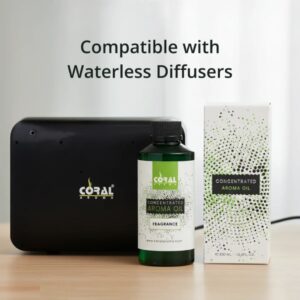
Cold-Air Nebulisation Diffusers are considered the gold standard for scent performance. These devices use pressurised airflow — produced by an internal pump — to atomise undiluted fragrance oil into an ultra-fine dry mist of microscopic particles. Because the oil is never mixed with water and never heated, the fragrance molecules remain chemically intact and disperse into the air at full potency. Cold-air nebulisers produce no visible mist, make minimal noise, add zero humidity to the room, and are the preferred technology for commercial environments — hotels, offices, retail stores, and any space where large-area coverage or HVAC integration is required. Coral Aroma’s full professional diffuser range — including the Coral 360, Tower Pro, Smart Shrub, Scent Box Fan Diffuser, and Aeroscent — all use cold-air nebulisation technology.
Ultrasonic Diffusers use high-frequency vibrations to break fragrance oil (mixed with water) into a fine cool mist that is then released into the air. The visible mist is water vapour carrying fragrance molecules. Ultrasonic diffusers are quieter, more affordable, and also function as light humidifiers — adding a small amount of moisture to the air alongside the scent. The Coral Home Aroma Humidifier Diffuser is an ultrasonic device, combining basic aromatherapy with gentle humidity output in a compact, USB-C powered unit.
Reed Diffusers use natural capillary action — fragrance oil travels up through reeds and evaporates passively into the air. No power is required, coverage is limited to small rooms, and the scent release is very gradual. Reed diffusers are a passive, low-intensity option for bedrooms, bathrooms, and compact spaces.
Heat Diffusers and Electric Warmers use a heat source to evaporate fragrance oils or wax melts. Heat diffusion is the least recommended method for pure aroma oil use, as elevated temperatures can alter and degrade fragrance compounds — producing a different, often weaker scent profile than the oil’s intended character.
What Is a Humidifier?
A humidifier is a device designed to increase the moisture level — the relative humidity — of the air in a room. Its primary function is environmental: correcting air that is too dry. The goal is not fragrance but comfort, health, and the protection of materials sensitive to low humidity.
Air that is excessively dry causes a range of problems. Skin becomes dry and irritated. Nasal passages and throat become uncomfortable. Sleep quality deteriorates. Wooden furniture, flooring, and musical instruments can crack or warp. Static electricity increases. In climates or seasons where indoor air becomes particularly dry — cold winters in Northern Europe, North America, and East Asia where central heating strips moisture from indoor air — a humidifier directly addresses these issues.
The main types of humidifiers include:
Ultrasonic Humidifiers use high-frequency vibrations to convert water into a fine cool mist. They are quiet, energy-efficient, and the most common type found in homes globally.
Evaporative Humidifiers pass air through a wet wick or filter, causing natural evaporation. The air naturally absorbs moisture as it moves through the device.
Steam Vaporisers (Warm Mist Humidifiers) heat water to produce steam. The steam is released into the air, raising humidity. These are effective but consume more energy and produce heat — a consideration in warm climates.
Whole-Home Humidifiers integrate with a building’s HVAC system to humidify all rooms simultaneously, maintaining target humidity levels automatically.
Most standard humidifiers do not include fragrance capability by design. Some ultrasonic humidifiers include a small aromatherapy tray or compartment where essential oils can be added — but this is a supplementary feature, not their core function.
The Core Difference: Purpose
The single most important distinction between an aroma diffuser and a humidifier is what they are fundamentally built to do.
An aroma diffuser is built to scent the air. A humidifier is built to moisturise the air.
These are different problems, addressed by different mechanisms, measured by different outcomes. A diffuser’s performance is evaluated by scent throw, coverage area, oil consumption efficiency, and fragrance longevity. A humidifier’s performance is evaluated by millilitres of moisture output per hour, the square metre area it can treat, and its ability to bring a room to a target relative humidity level.
Confusing the two leads to purchasing decisions that do not solve the actual problem. Buying a humidifier because you want your home to smell like oud or sandalwood will not give you the fragrance experience you are looking for. Buying a cold-air nebulisation diffuser because the air in your home is uncomfortably dry during winter will not address the humidity deficit.
Technology: How Each Device Actually Works
Understanding the underlying technology clarifies why the two devices cannot simply substitute for each other.
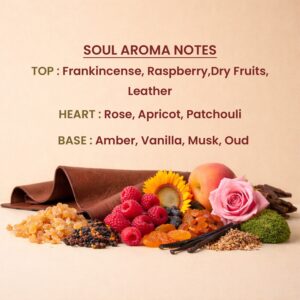
In a cold-air nebulisation diffuser, an internal compressor or pump drives pressurised air through a nebulisation chamber. This chamber contains pure, undiluted fragrance oil — no water added. The pressurised airflow atomises the oil into particles as small as 1 to 5 microns. At this scale, the particles are light enough to remain suspended in the ambient air for extended periods, distributing fragrance evenly across the entire volume of a room. Because no heat is applied and no water is involved, the oil’s chemical profile — including its top, heart, and base notes — remains fully intact throughout the diffusion process.
In an ultrasonic humidifier or ultrasonic diffuser, a ceramic disc vibrates at ultrasonic frequencies (typically above 20,000 Hz) beneath a water reservoir. These vibrations create cavitation — microscopic bubbles that collapse and produce energy, breaking the surface of the water into micro-droplets. The resulting cool mist is propelled into the air by a small fan. When fragrance oil is added to the water reservoir (as in an ultrasonic diffuser), the oil is dispersed alongside the water mist. The visible plume is primarily water vapour, with fragrance molecules carried within it.
In a steam vaporiser humidifier, water is heated to boiling and steam is released. This is purely a moisture delivery mechanism and is not suitable for fragrance oils, as the heat would damage most oil compounds.
The implication of these technology differences is practical: if you add fragrance oil directly to a standard humidifier’s water tank (that does not have an aromatherapy feature), the oil can damage the ultrasonic disc, clog the internal components, and void the warranty. Oils are not water-soluble and behave unpredictably in devices not designed to handle them.
Key Differences: Aroma Diffuser vs Humidifier
Primary Function
An aroma diffuser’s primary function is fragrance delivery — enriching the olfactory atmosphere of a space with a chosen scent. A humidifier’s primary function is air moisture regulation — raising relative humidity to a more comfortable or healthy level.
What Goes Inside
Aroma diffusers use fragrance oil, essential oil, or aroma blends — either undiluted (cold-air nebulisation) or mixed with water (ultrasonic diffusers). Humidifiers use clean water only. Some humidifiers have a designated essential oil compartment or tray, but the water reservoir itself should never receive oil unless the device is specifically designed for it.
Output Type
Cold-air nebulisation diffusers produce an invisible dry mist — no visible plume, no added humidity. Ultrasonic diffusers produce a visible cool mist that carries both fragrance and a small amount of moisture. Humidifiers produce visible cool mist (ultrasonic), invisible evaporated moisture (evaporative), or warm steam (steam vaporisers), with no fragrance unless a dedicated aromatherapy feature is included.
Effect on Room Humidity
A cold-air nebulisation diffuser has zero measurable effect on room humidity. An ultrasonic diffuser raises humidity very slightly — the moisture contribution is minimal compared to a dedicated humidifier given the small water volumes involved. A humidifier meaningfully raises room humidity and is the correct device when the target is achieving a specific relative humidity percentage.
Coverage and Scale
Professional cold-air nebulisation diffusers can cover hundreds of square metres and integrate with HVAC systems to scent entire buildings. The Coral 360 Smart Diffuser, for example, covers up to 400 m² (1,200 m³). Most home humidifiers are designed for single rooms of 30 to 60 m², with commercial units covering larger areas. The Coral Home Aroma Humidifier Diffuser covers 50 to 100 m² — appropriate for bedrooms and medium rooms.
Oil Compatibility
Cold-air nebulisation diffusers are designed exclusively for undiluted aroma oils and must not be used with water. Ultrasonic diffusers use water as the primary medium, with a few drops of essential oil added for fragrance. Standard humidifiers are not designed for fragrance oil and should not have oil added to the water reservoir unless a dedicated aromatherapy tray is included.
Noise Level
Cold-air nebulisation diffusers operate at very low noise levels — the Coral 360, for example, produces ≤40 dBA, quieter than a library. Ultrasonic humidifiers and diffusers are also relatively quiet. Steam vaporisers produce some noise from the boiling process.
Energy Consumption
Humidifiers — particularly steam vaporisers — can consume significant power due to the energy needed to heat water or sustain fans over long operating periods. Cold-air nebulisation diffusers like the Coral 360 operate at 14W. The Coral Home Aroma Humidifier Diffuser, being a compact ultrasonic unit, uses just 0.3W — making it extremely energy-efficient.
Maintenance
Humidifiers require regular cleaning of the water reservoir to prevent mould, bacteria, and mineral scale buildup — particularly in hard water regions. The reservoir must be emptied and dried when not in use. Cold-air nebulisation diffusers require periodic cleaning of the nebulisation nozzle to prevent oil residue buildup. Ultrasonic diffusers require cleaning of both the water reservoir and the ultrasonic disc.
Aesthetics and Design Context
Premium cold-air nebulisation diffusers — particularly Coral Aroma’s commercial range — are designed for high-end interiors: luxury hotels, flagship retail, corporate headquarters. The Coral Smart Shrub and Tower Pro are as much considered interior objects as they are functional devices. Most humidifiers are designed for functional domesticity rather than aesthetic statement, though compact ultrasonic units like the Coral Home Aroma Humidifier Diffuser take a minimal, design-conscious approach suitable for bedroom or desk placement.
Where They Overlap: The Hybrid Device
The category boundary between aroma diffuser and humidifier is not always rigid. Ultrasonic diffusers sit at the intersection of both categories — they deliver fragrance while also adding a modest amount of moisture to the air. For consumers in very dry climates who want both functions from a single compact device, an ultrasonic diffuser-humidifier hybrid can serve both needs at a modest scale.
The Coral Home Aroma Humidifier Diffuser exemplifies this hybrid positioning. At its core, it is an ultrasonic device that accepts a few drops of essential oil in its 200ml water reservoir, dispersing both moisture and fragrance through the same cool mist output. Its soft ambient lamp, four timer settings, automatic water shortage power-off protection, and USB-C power delivery make it a considered, safe choice for bedroom and desktop use. It covers 50 to 100 m² — the right scale for a home bedroom or a small private office.
Where the hybrid approach has limits is scale and fragrance intensity. A hybrid ultrasonic unit will never match the scent throw of a cold-air nebulisation diffuser. For spaces larger than 100 m², for commercial environments, or for users whose primary priority is a strong, defined fragrance profile, a dedicated cold-air diffuser is the correct choice — and a separate humidifier should be used if the room also needs humidity management.
When to Choose an Aroma Diffuser
Choose a dedicated cold-air nebulisation aroma diffuser when:
Your primary goal is fragrance — creating a specific olfactory atmosphere in your space. You want to fill a large space, a commercial environment, or multiple rooms with a consistent, long-lasting scent. You are working in a hospitality, retail, or corporate context where scent marketing is a deliberate brand strategy. You want to use premium aroma oils or fragrance blends at their full, undiluted potency. You need smart app control, programmable timers, and variable intensity settings. Your space already has adequate humidity and you have no need to add moisture to the air. You want HVAC integration to distribute fragrance across an entire building or large facility without visible hardware.
Choose an ultrasonic diffuser-humidifier hybrid when you want both gentle fragrance and modest humidity improvement in a single compact device, primarily for a bedroom or small room, without requiring high-intensity scent performance.
When to Choose a Humidifier
Choose a dedicated humidifier when:
Your indoor air is measurably dry — particularly during winter months in cold climates where central heating significantly reduces indoor relative humidity. You are experiencing dry skin, chapped lips, irritated nasal passages, or disturbed sleep that is attributable to low humidity. You have wooden furniture, hardwood flooring, a piano, or other humidity-sensitive materials that require a stable indoor environment. You are managing respiratory conditions — such as dry cough, sinusitis, or asthma — that are aggravated by low humidity. A baby or young child’s bedroom requires consistent, comfortable humidity levels for healthy sleep and breathing. Your target is achieving and maintaining a specific relative humidity level (typically 40 to 60% is considered optimal for human comfort and health).
Common Misconceptions
“My diffuser will also humidify my room.”
A cold-air nebulisation diffuser adds zero humidity to the air. Even an ultrasonic diffuser’s humidity contribution is minimal compared to a dedicated humidifier. If dry air is a health or comfort concern, a dedicated humidifier is the appropriate device — a diffuser will not meaningfully address it.
“I can add fragrance oil directly to my humidifier’s water tank.”
You should not add fragrance oil to a standard humidifier’s water reservoir unless the device includes a dedicated aromatherapy tray or compartment designed for this purpose. Fragrance oil is not water-soluble and can damage the ultrasonic disc, block internal components, and create a breeding ground for bacteria. Always check the manufacturer’s instructions before adding any substance other than clean water to a humidifier.
“Ultrasonic diffusers are better because you can see the mist.”
Visible mist is not an indicator of fragrance performance — it is water vapour. Cold-air nebulisation diffusers produce an invisible dry mist that carries fragrance at far greater intensity, consistency, and range than the visible mist of an ultrasonic device. For scent performance, invisible cold-air nebulisation consistently outperforms ultrasonic diffusion. Visible mist is simply a characteristic of the technology, not a quality signal.
“A humidifier with essential oils is the same as an aroma diffuser.”
Adding essential oil drops to a humidifier with an aromatherapy tray produces fragrance, but the experience is quite different from a purpose-built diffuser. The oil is diluted by the water, the scent is weaker and less defined, the coverage is smaller, and the device cannot be used with the full range of fragrance oils compatible with dedicated diffusers. It is a functional workaround, not an equivalent.
“Both devices need to be running all the time.”
Neither device should be run continuously without breaks. Cold-air nebulisation diffusers are typically programmed to cycle — diffusing for a set period, then pausing — which prevents olfactory fatigue and extends oil life. Humidifiers should be monitored with a hygrometer and switched off when the target humidity level is reached to avoid over-humidification, which can encourage mould growth.
How to Use Both Devices Together
In many home and commercial settings, the ideal setup involves both a dedicated aroma diffuser and a dedicated humidifier — each handling the function it is designed for, independently.
In a luxury bedroom, for example, a compact ultrasonic humidifier maintains comfortable humidity levels throughout the night while a cold-air diffuser — positioned in the living area or entrance — creates the home’s signature scent experience. The two devices do not interfere with each other and together create an environment that is both comfortable and atmospherically considered.
In a hotel property, the HVAC system handles temperature and air quality management at the building level, while HVAC-integrated cold-air nebulisation diffusers from Coral Aroma handle fragrance distribution across public areas, with individual room units in suites. Humidity management, where required, is handled separately as part of the building services infrastructure.
The key principle is to avoid expecting a single device to perfectly solve two different problems. Each device does one thing exceptionally well. Use both when both goals matter.
Coral Aroma’s Range: Diffusers and Humidifiers
Coral Aroma’s product catalogue spans both categories, allowing customers to select the right device for their specific need or combine both approaches.
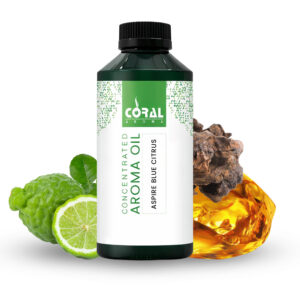
For pure fragrance performance, Coral Aroma’s cold-air nebulisation diffuser range includes machines for every scale of space — from the portable Coral Scent Aura for personal and small-room use, through the Coral 360 Smart Diffuser for offices and large living spaces (up to 400 m²), to the Coral Tower Pro, Smart Shrub, and Aeroscent Large for hotel lobbies, flagship retail, and large commercial environments. All professional diffusers use undiluted aroma oils from Coral Aroma’s library of over 300 premium fragrance blends, covering Arabic oud, hotel-inspired, perfume-inspired, citrus, floral, musky, aquatic, and woody scent profiles.
For consumers who want both gentle aromatherapy and modest humidity from a single compact device, the Coral Home Aroma Humidifier Diffuser (AED 125) is a thoughtfully designed ultrasonic unit covering 50 to 100 m², powered by USB-C, equipped with soft ambient lamp lighting and four timer settings, and certified to CE, RoHS, and FCC standards. It is the right choice for a bedroom or small personal space where the combination of light fragrance and minimal humidity improvement in a single quiet device is the priority.
For businesses exploring scent marketing as a strategic tool — whether in retail, hospitality, or corporate environments — Coral Aroma also offers AMC rental and managed scent service packages, removing the need for upfront hardware investment and providing ongoing oil supply and technical maintenance.
Frequently Asked Questions
What is the main difference between an aroma diffuser and a humidifier?
The main difference is purpose. An aroma diffuser is designed to disperse fragrance into the air using aroma or essential oils. A humidifier is designed to add moisture to the air by releasing water vapour. While some ultrasonic diffusers add a small amount of humidity as a secondary effect, the two devices address fundamentally different problems and should not be treated as interchangeable.
Can I use an aroma diffuser instead of a humidifier?
A cold-air nebulisation diffuser will not humidify your room — it adds zero moisture to the air. An ultrasonic diffuser adds a very small amount of humidity as a secondary effect, but this is not comparable to a dedicated humidifier’s output. If your goal is to meaningfully raise indoor humidity, you need a dedicated humidifier.
Can I put fragrance oil in my humidifier?
You should not add fragrance oil directly to a standard humidifier’s water reservoir. Oil and water do not mix, and oil can damage the device’s internal components — particularly the ultrasonic disc. Some humidifiers include a dedicated aromatherapy tray where a few drops of essential oil can be placed safely. Always check your device’s manual before adding anything other than clean water.
Which is better for a bedroom: an aroma diffuser or a humidifier?
This depends on your goal. If you want a pleasant fragrance for better relaxation and sleep quality, an aroma diffuser or a hybrid ultrasonic diffuser-humidifier is the right choice. If your bedroom air is dry — causing throat irritation, dry skin, or disrupted sleep — a humidifier addresses the root cause. If you want both benefits in one compact device, a hybrid unit like the Coral Home Aroma Humidifier Diffuser is the practical solution for a bedroom setting.
Does an aroma diffuser make the air moist?
A cold-air nebulisation diffuser does not make the air moist at all — it releases a dry, invisible fragrance mist with no water content. An ultrasonic diffuser releases a cool visible mist that carries a small amount of moisture alongside fragrance, but its humidification effect is minimal compared to a dedicated humidifier.
Is an ultrasonic diffuser the same as a humidifier?
An ultrasonic diffuser and an ultrasonic humidifier use the same core technology — high-frequency vibrations to create a fine mist — but they are designed for different primary outcomes. An ultrasonic diffuser is optimised for fragrance delivery, typically uses a smaller water reservoir, and is designed to carry aroma oil in the mist. An ultrasonic humidifier is optimised for moisture output, uses a larger water reservoir, and measures performance in millilitres of moisture released per hour.
What type of aroma diffuser is best for large spaces?
Cold-air nebulisation diffusers are the best type for large spaces. They can cover hundreds of square metres, integrate with HVAC systems, and maintain consistent fragrance distribution across commercial environments. Ultrasonic diffusers are more appropriate for smaller domestic spaces. For large spaces, Coral Aroma recommends machines such as the Coral 360 Smart Diffuser (up to 400 m²), Coral Tower Pro, Coral Smart Shrub, and Aeroscent Smart Diffuser Large.
How often should I clean my aroma diffuser or humidifier?
Humidifiers should be cleaned every one to three days if used regularly to prevent mould, bacteria, and mineral scale from developing in the water reservoir. Cold-air nebulisation diffusers should have their nebulisation nozzles cleaned periodically to remove fragrance oil residue — typically every two to four weeks depending on usage intensity. Ultrasonic diffusers should have both the water reservoir and ultrasonic disc cleaned regularly.
Can a humidifier spread fragrance around the house?
A standard humidifier is not designed to spread fragrance and will not meaningfully scent a room unless it includes a dedicated aromatherapy tray. Even then, the fragrance coverage is limited. To achieve consistent, whole-home fragrance distribution, a cold-air nebulisation diffuser — particularly one integrated with an HVAC system — is the correct approach.
What is cold-air nebulisation and why does it matter?
Cold-air nebulisation is the technology used in professional-grade aroma diffusers. It atomises undiluted fragrance oil into micro-particles using pressurised air, without heat or water. Because the oil is never heated or diluted, its full fragrance profile — including delicate top notes that would otherwise be destroyed by heat — is preserved and dispersed at maximum potency. This is why cold-air nebulisation diffusers produce a stronger, more authentic, and longer-lasting scent experience than ultrasonic or heat-based alternatives.
Conclusion
An aroma diffuser and a humidifier are not the same device, serve different purposes, and should be selected based on what you are actually trying to achieve in your space.
If your goal is fragrance — creating an immersive, consistent scent atmosphere in your home, office, hotel, or retail environment — a cold-air nebulisation aroma diffuser is the right tool. If your goal is air quality comfort — relieving dry skin, improving breathing, protecting humidity-sensitive materials during dry seasons — a humidifier is the correct device. If you want a modest version of both in a single compact unit for personal or bedroom use, a hybrid ultrasonic diffuser-humidifier bridges both worlds at a small scale.
The confusion between these two categories is understandable, given that the market has not always been clear about the distinction. But clarity here leads to better buying decisions, better results, and devices that are used correctly and last longer.
Coral Aroma’s range covers both categories — from professional cold-air nebulisation diffusers trusted by leading hotels and commercial clients worldwide, to the compact Coral Home Aroma Humidifier Diffuser for everyday home use. Explore the full range at coralaroma.com or contact the team to discuss which solution is right for your specific space.